
Company
Freshworks
Products
Freshchat
Freshdesk
Team
Challenge
Freshworks launched an ambitious initiative to build 100 third-party integrations in 100 days, expanding support workflows beyond tickets and chat. As integrations shipped, experiences began fragmenting rapidly. Similar tasks behaved differently across integrations, creating inconsistency for users and increasing design, engineering, and review overhead. Without intervention, the initiative risked scaling complexity faster than customer value.
What I owned
I was the sole designer supporting the initiative, responsible for creating a scalable framework that could support rapid integration development while maintaining a consistent user experience.
Identified systemic UX fragmentation across integration experiences
Audited shipped integrations and uncovered scaling risks
Reframed the challenge from individual integration design to platform consistency
Built a reusable structural framework for future integrations
Aligned 6 PMs and multiple engineering teams around a shared model
Defined reusable patterns, layouts, and interaction structures
Established scalable review and governance processes
Reduced design bottlenecks across the initiative
Project complexity
100 integrations in 100 days (rapid delivery timeline)
Sole designer across the initiative (single point of design ownership)
6 PM workstreams (different priorities, roadmaps, and requirements)
Multiple engineering teams (parallel implementation across teams)
Cross-functional alignment challenge (required pausing active development to establish foundations)
Impact
Reduced design review effort through reusable framework patterns
Decreased visual QA cycles by creating a shared foundation
Enabled faster integration delivery without sacrificing consistency
Increased reuse across design and engineering teams
Established a scalable system adopted across future integrations
Transformed design from a delivery bottleneck into an organizational multiplier
I was the sole designer across the entire initiative.
Working simultaneously with 6 PMs and multiple engineering teams, each moving at their own pace with their own constraints.

60%
Requirement alignment meetings and slack across 6 PMS
30%
Visual QA catching implementation inconsistencies
10%
Actually designing
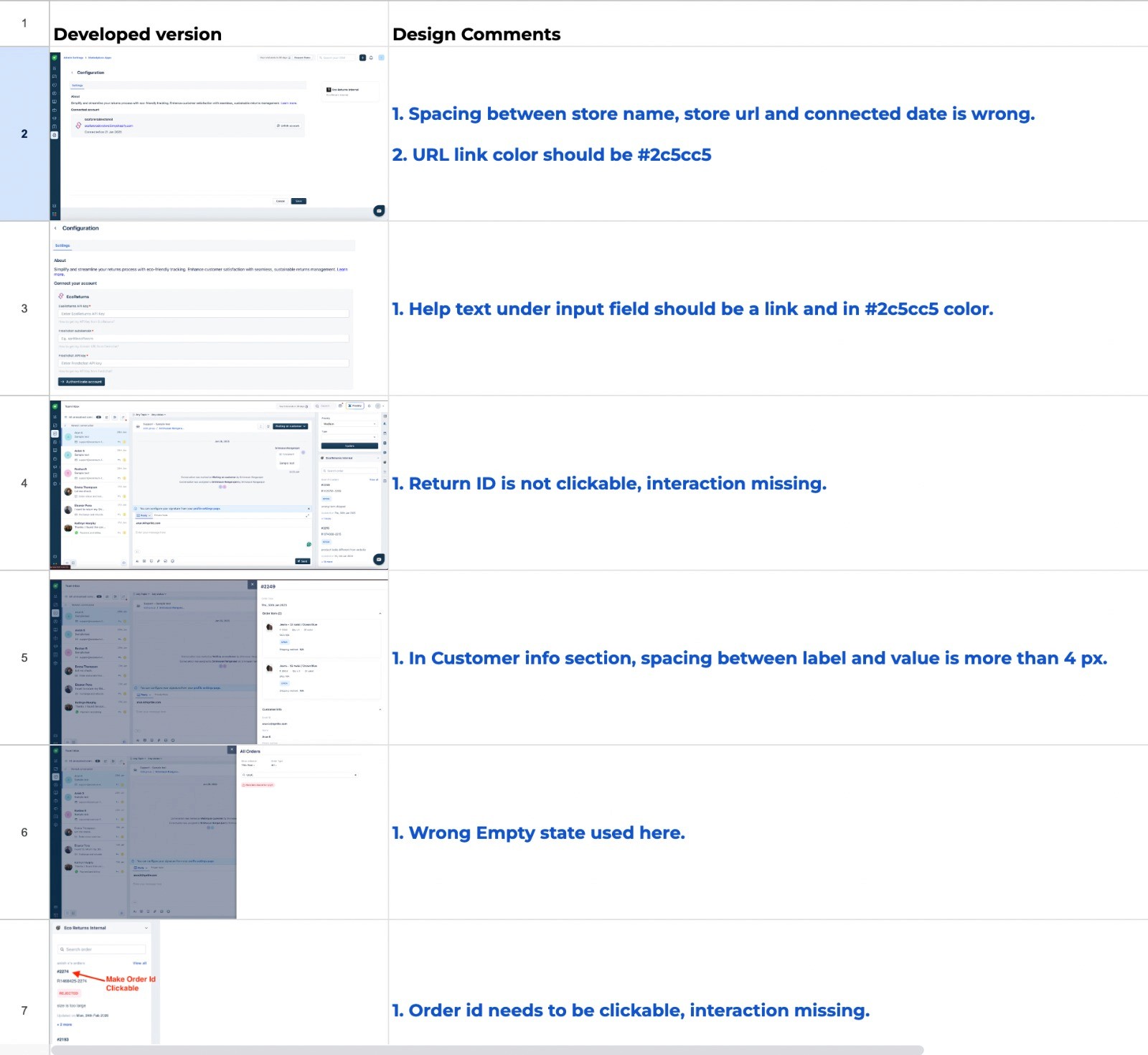
Every integration had the same header structure, same footer with primary actions, same component library in the body. What changes is the content inside, but where to look and how to act is always identical.
Shared structure
Header
Content zones
Action areas
Loading states
Flexible content
Intergration specific workflows
Custom data
API specific configurations

