Made workplace energy use visible so employees would actually change their habits, without adding a single extra step to their day
Made workplace energy use visible so employees would actually change their habits, without adding a single extra step to their day
An academic studio project sponsored by Salesforce, with real access, real employees, and one conversation that permanently changed how I think about AI.
An academic studio project sponsored by Salesforce, with real access, real employees, and one conversation that permanently changed how I think about AI.
Academic Project
Academic Project
Sustainability
Sustainability
Behavior change
Behavior change
Responsible AI
Responsible AI
Enterprise SaaS
Enterprise SaaS
0 → 1 Concept
0 → 1 Concept

Company
Salesforce
Team
6 Designers
2 Salesforce Product Managers
Challenge
Salesforce employees cared deeply about sustainability, but digital energy consumption remained largely invisible. Without understanding which actions mattered or when to take them, awareness rarely translated into behavior change. The challenge was to help employees reduce their digital carbon footprint without disrupting existing workflows or adding another tool to manage.
What I led
I led product strategy, behavioral research, concept development, and experience design for Clover, a system that makes workplace energy consumption visible at the moment decisions are made.
Reframed the problem from sustainability awareness to behavioral action
Conducted employee interviews and synthesized behavioral barriers
Applied BJ Fogg's Behavior Model to product strategy
Defined the "silent until significant" intervention framework
Designed passive and active nudge systems embedded within workflows
Developed scalable sustainability patterns for enterprise environments
Evaluated responsible AI tradeoffs for long-term environmental impact
Project complexity
Salesforce-sponsored project (real stakeholder access and feedback cycles)
Multiple project pivots (direction refined through employee reviews and mid-term critiques)
Behavior change challenge (changing habits without changing workflows)
Responsible AI tradeoffs (balancing AI personalization against sustainability costs)
Cross-functional collaboration (employees, PMs, researchers, and sponsors)
Impact
Because this was a concept project, success was evaluated through stakeholder validation and employee feedback rather than shipped metrics.
Validated with Salesforce employees through multiple review sessions
Established the "silent until significant" design principle
Demonstrated a scalable behavioral framework for reducing digital emissions
Received positive feedback for clarity, usefulness, and low interruption
Influenced my approach to responsible AI and sustainability design
Executive Summary
Executive Summary
Salesforce is one of the world's leading enterprise CRM platforms, serving over 150,000 businesses globally and publicly committed to net-zero operations. The brief they brought to us wasn't simple: help employees reduce their digital carbon footprint without disrupting their workflow
Salesforce is one of the world's leading enterprise CRM platforms, serving over 150,000 businesses globally and publicly committed to net-zero operations. The brief they brought to us wasn't simple: help employees reduce their digital carbon footprint without disrupting their workflow
The gap nobody was talking about
The gap nobody was talking about
Salesforce had already invested heavily in sustainability, with carbon offset programs, renewable energy partnerships, awareness training, and employees knew climate change mattered, they wanted to help, yet nothing was changing.
Salesforce had already invested heavily in sustainability, with carbon offset programs, renewable energy partnerships, awareness training, and employees knew climate change mattered, they wanted to help, yet nothing was changing.
When we talked to employees, we heard the same pattern repeatedly. They cared. They just didn't know which actions mattered, when to take them, or whether their individual effort would make any real difference.
When we talked to employees, we heard the same pattern repeatedly. They cared. They just didn't know which actions mattered, when to take them, or whether their individual effort would make any real difference.
"I carpool when I can, I bring my own mug, but I have no idea what I could even do at my desk."
"I carpool when I can, I bring my own mug, but I have no idea what I could even do at my desk."
Research interview
Research interview
This project was agile, and iterative. With amazing PMs who redirected us when we went down unhelpful paths, and mid-term presentations to actual Salesforce employees who told us what was landing and what wasn't.
This project was agile, and iterative. With amazing PMs who redirected us when we went down unhelpful paths, and mid-term presentations to actual Salesforce employees who told us what was landing and what wasn't.

Research
Research
Research insights that shook us:
Research insights that shook us:
A single one-hour video call with cameras on consumes as much energy as charging your phone for a full year.
A single one-hour video call with cameras on consumes as much energy as charging your phone for a full year.
Nobody knew this. The cost is completely invisible. It happens in data centers employees never see. There's no visible feedback, no signal that any choice is being made at all.Nobody knew this. The cost is completely invisible. It happens in data centers employees never see. There's no visible feedback, no signal that any choice is being made at all.
Nobody knew this. The cost is completely invisible. It happens in data centers employees never see. There's no visible feedback, no signal that any choice is being made at all.Nobody knew this. The cost is completely invisible. It happens in data centers employees never see. There's no visible feedback, no signal that any choice is being made at all.

The gap wasn't between values and awareness. It was between awareness and action. And the reason people weren't acting wasn't laziness, it was invisibility.
The gap wasn't between values and awareness. It was between awareness and action. And the reason people weren't acting wasn't laziness, it was invisibility.
The mid-term pivot
The mid-term pivot
Our mid-term presentation to Salesforce employees was the moment that sharpened everything.
Our mid-term presentation to Salesforce employees was the moment that sharpened everything.
We presented our initial direction, making digital energy costs visible through contextual nudges.
We presented our initial direction, making digital energy costs visible through contextual nudges.
Feedback:
Employees didn't want to be interrupted
They didn't want more notifications.
They didn't want another thing demanding their attention in an already-demanding workday.
Feedback:
Employees didn't want to be interrupted
They didn't want more notifications.
They didn't want another thing demanding their attention in an already-demanding workday.

One insight came up repeatedly:
One insight came up repeatedly:
"If it's one more thing I have to open and check, I won't do it. I'm already drowing in tools."
"If it's one more thing I have to open and check, I won't do it. I'm already drowing in tools."
We went back and iterated. The feedback directly produced the principle that became Clover's foundation: silent until significant.
We went back and iterated. The feedback directly produced the principle that became Clover's foundation: silent until significant.
What we built
What we built
Silent until significant
Silent until significant
We didn't design a sustainability dashboard, but a system that behaves like a thoughtful colleague. One that stays quiet until it has something significant.
We didn't design a sustainability dashboard, but a system that behaves like a thoughtful colleague. One that stays quiet until it has something significant.
The behavioral science foundation
The behavioral science foundation
BJ Fogg's Behavior Model says behavior happens when three things converge simultaneously: motivation, ability, and a timely prompt. Most sustainability tools hammer motivation, be it guilt, inspiration, or peer pressure. They assume that if you care enough, you'll figure out what to do.
BJ Fogg's Behavior Model says behavior happens when three things converge simultaneously: motivation, ability, and a timely prompt. Most sustainability tools hammer motivation, be it guilt, inspiration, or peer pressure. They assume that if you care enough, you'll figure out what to do.

Fogg, B. J. (2009). A behavior model for persuasive design
The three conditions
The three conditions
Clover surfaces a nudge only when all three are true simultaneously:
Clover surfaces a nudge only when all three are true simultaneously:
A sustainable alternative exists
A sustainable alternative exists
Not just awareness: a real action available right now
Not just awareness: a real action available right now
The user is at a natural decision point
The user is at a natural decision point
About to start a meeting, upload files, schedule something
About to start a meeting, upload files, schedule something
The cost of changing is low
The cost of changing is low
The sustainable choice requires minimal disruption
The sustainable choice requires minimal disruption
Miss any one? Clover stays silent
Miss any one? Clover stays silent
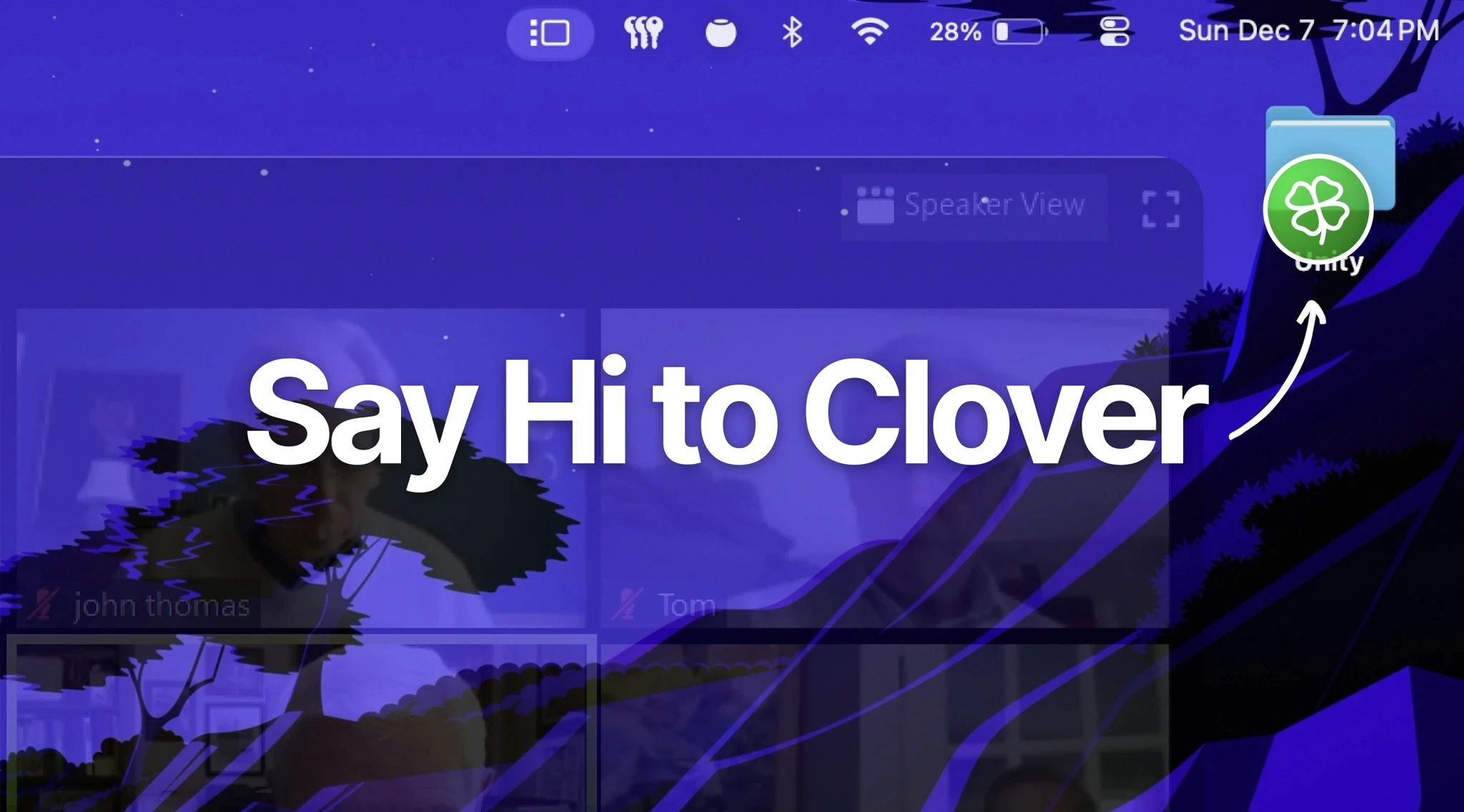
In its default state Clover is a small translucent widget.
In its default state Clover is a small translucent widget.
Present but not demanding. When all three conditions are met, it turns green. A signal that says: there's something here when you're ready.
Present but not demanding. When all three conditions are met, it turns green. A signal that says: there's something here when you're ready.

Impact framing was deliberately human-scale.
Impact framing was deliberately human-scale.
Not "you saved 2.4 kWh." Instead: "Your choices this week saved enough energy to power two homes for a month."
Not "you saved 2.4 kWh." Instead: "Your choices this week saved enough energy to power two homes for a month."

Patterns scale up
Patterns scale up
Clover is just the surface, its a visual proof of concept to demonstrate the real innovation that lies underneath. Its a consistent design pattern system for reducing digital power use at scale.
Clover is just the surface, its a visual proof of concept to demonstrate the real innovation that lies underneath. Its a consistent design pattern system for reducing digital power use at scale.
Here's what it looks like: It's a scalable blueprint basically something Salesforce can apply across tools, teams, and workflows to quietly reduce digital emissions at massive scale.
Here's what it looks like: It's a scalable blueprint basically something Salesforce can apply across tools, teams, and workflows to quietly reduce digital emissions at massive scale.

Embedded nudges involve subtle cues woven directly into existing interfaces, designed so sustainable behavior never requires switching tools.
Passive nudges appear while you’re performing an action: joining, uploading, sharing; the moment when power-waste can still be prevented.
Active nudges are upstream ones that intervene before a high-power decision, like scheduling a meeting, choosing call settings, selecting a file size.
Impact framing: We learned people don’t relate to kWh. So we frame energy in everyday equivalents: ‘minutes of projector time saved,’ ‘hours of device power avoided': It turns invisible consumption into something tangible.
Reinforcement: To build durable habits, people need feedback: individual progress, team milestones, shared wins. Reinforcement makes sustainable behavior rewarding.
Automation: In a future concept, patterns could automate certain steps like compress files, toggle video, sleep devices but only when the energy saved is far greater than the energy used.
Embedded nudges involve subtle cues woven directly into existing interfaces, designed so sustainable behavior never requires switching tools.
Passive nudges appear while you’re performing an action: joining, uploading, sharing; the moment when power-waste can still be prevented.
Active nudges are upstream ones that intervene before a high-power decision, like scheduling a meeting, choosing call settings, selecting a file size.
Impact framing: We learned people don’t relate to kWh. So we frame energy in everyday equivalents: ‘minutes of projector time saved,’ ‘hours of device power avoided': It turns invisible consumption into something tangible.
Reinforcement: To build durable habits, people need feedback: individual progress, team milestones, shared wins. Reinforcement makes sustainable behavior rewarding.
Automation: In a future concept, patterns could automate certain steps like compress files, toggle video, sleep devices but only when the energy saved is far greater than the energy used.
Learning
Learning
The conversation that changed how I think
The conversation that changed how I think
When we visited Salesforce's office in person, I had a conversation with Scott, that I still think about.
When we visited Salesforce's office in person, I had a conversation with Scott, that I still think about.
Everyone else had encouraged us to use AI to personalise the nudges, and predict optimal intervention moments. But we didn't take that route as it felt like the AI x Sustainability paradox was real and we were very aware of the energy AI uses.
Everyone else had encouraged us to use AI to personalise the nudges, and predict optimal intervention moments. But we didn't take that route as it felt like the AI x Sustainability paradox was real and we were very aware of the energy AI uses.
Skott pushed back differently. He didn't say AI was wrong. He asked me to think about the tradeoff differently, not as a point-in-time energy cost, but as a compounding one:
Skott pushed back differently. He didn't say AI was wrong. He asked me to think about the tradeoff differently, not as a point-in-time energy cost, but as a compounding one:
"If an AI model consumes energy today to personalise nudges, but enables behavioral changes that reduce energy consumption at scale over years, what's the net impact? Not today. Over time. And how do we design accountability into that assumption so we're not just hoping the math works out?"
"If an AI model consumes energy today to personalise nudges, but enables behavioral changes that reduce energy consumption at scale over years, what's the net impact? Not today. Over time. And how do we design accountability into that assumption so we're not just hoping the math works out?"
This reframed everything I thought I knew about responsible AI design.
This reframed everything I thought I knew about responsible AI design.
Next steps
Next steps
What we didn't explore
What we didn't explore

"The question isn't 'is AI sustainable right now?' The question is: are we designing AI systems responsibly for the future they're compounding into?"
"The question isn't 'is AI sustainable right now?' The question is: are we designing AI systems responsibly for the future they're compounding into?"
This is the kind of thinking I now bring to every AI product I work on.
This is the kind of thinking I now bring to every AI product I work on.
Testing
Testing
What I learned from real employees
What I learned from real employees
This was an academic studio sponsored, concept project. There are no shipped retention metrics or quarterly business impact numbers. What we have are user testing feedback from the actual employees this would serve.
This was an academic studio sponsored, concept project. There are no shipped retention metrics or quarterly business impact numbers. What we have are user testing feedback from the actual employees this would serve.
"Unlike most enterprise features that require explanation, this felt immediately understandable."
"Unlike most enterprise features that require explanation, this felt immediately understandable."
User interview quote · Testing
User interview quote · Testing
"It's there when I'm ready for it. I don't have to think about it until I want to."
"It's there when I'm ready for it. I don't have to think about it until I want to."
User interview quote · Testing
User interview quote · Testing
Why do these matter?
Why do these matter?
For enterprise software, "immediately understandable" is a genuinely high bar. Enterprise tools almost universally require onboarding and documentation. A feature that users simply get on first contact, with zero explanation, is solving the right problem in the right way.
For enterprise software, "immediately understandable" is a genuinely high bar. Enterprise tools almost universally require onboarding and documentation. A feature that users simply get on first contact, with zero explanation, is solving the right problem in the right way.
The second quote validated the core design principle. The widget wasn't being ignored. It was being noticed at the right moments, on the user's terms. Ambient design, working exactly as intended.
The second quote validated the core design principle. The widget wasn't being ignored. It was being noticed at the right moments, on the user's terms. Ambient design, working exactly as intended.
Reflection
What I carry forward
This project taught me that the most sophisticated design decision is sometimes knowing what not to build, and being able to explain exactly why. Clover also taught me that real design access changes everything. The conversations we had in the Salesforce office with employees, with PMs, and Scott, produced insights no desk research could have.